

Introduction
Titanium nitride (TiN), as a multifunctional new material, combines excellent properties such as high melting point, high hardness, superior chemical stability, electrical and thermal conductivity, and biocompatibility. It has demonstrated irreplaceable value in various fields including industrial production, new material R&D, and biomedicine, with its application scope continuously expanding alongside technological advancements.
I. Physicochemical Properties of Titanium Nitride
(I) Physical PropertiesTitanium nitride exhibits outstanding core physical parameters: the melting point ranges from 2950.6 to 3205.8℃, the linear expansion coefficient is 5.712~7.053×10⁻⁶ (1/K) (at 25℃), the density is between 5.435 and 5.447g/cm³, the thermal conductivity is 25.081 W·m⁻¹·K⁻¹ (in the temperature range of 300~2000℃), and the Mohs hardness reaches 8~9, featuring strong wear resistance.In terms of appearance, the color of titanium nitride varies with its form and particle size: ordinary titanium nitride powder is yellowish-brown, ultrafine powder is black, and the crystalline state is yellow; a large accumulation of titanium nitride crystals can present a golden metallic luster, laying a foundation for its decorative applications.(II) Chemical PropertiesTitanium nitride has stable chemical properties and does not react with common substances such as water, hydrochloric acid, and sulfuric acid at room temperature. However, it can dissolve in hydrofluoric acid, and if the hydrofluoric acid system contains oxidants, titanium nitride can be completely dissolved. In addition, titanium nitride will decompose in strong alkali solutions and release ammonia gas.
II. Core Application Fields of Titanium Nitride
Based on its excellent physicochemical properties, titanium nitride has been applied in multiple key fields, as detailed below:
(I) Coating and Decoration Field
(I) Coating and Decoration Field
- As a low-cost wear-resistant and corrosion-resistant coating, its performance is superior to traditional vacuum coatings, and it is widely used in the surface treatment of mechanical components;
- With its golden metallic luster, it has become the preferred alternative to gold decorative materials, which can be used as golden coatings in the jewelry industry to reduce application costs;
- Coated on glass surfaces: when the film thickness exceeds 90nm, the infrared reflectivity is over 75%, which can significantly improve the thermal insulation performance of glass; by adjusting the nitrogen content in titanium nitride, the color of the film can be flexibly changed, balancing practicality and aesthetics.
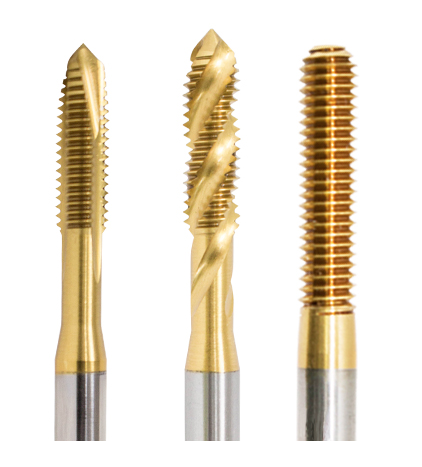
(II) Cutting Tool and Wear-Resistant Material Field
- Utilizing its high hardness (Mohs 8~9) and low friction coefficient, new types of cutting tools have been developed, whose durability and service life are far superior to ordinary cemented carbide tools;
- It can be used as a high-temperature lubricant to meet the lubrication needs under extreme working conditions;
- Adding an appropriate amount of titanium nitride to magnesia-carbon bricks can greatly improve the slag erosion resistance of the material and optimize the performance of refractory materials.
(III) Ceramic and Composite Material Field
- As a multifunctional ceramic additive: adding titanium nitride to TiC-Mo-Ni series cermets can refine the hard phase grains, significantly improve the mechanical properties of ceramics at room and high temperatures, and enhance their high-temperature corrosion resistance and oxidation resistance;
- Adding TiN powder to ceramic materials in a certain proportion can enhance the strength, toughness, and hardness of ceramics;
- Nano-titanium nitride can be used in TiN/Al₂O₃ composite nanoceramics. After uniform dispersion through processes such as mechanical mixing, a conductive network is formed inside the material, which can be used as electronic components in the semiconductor industry.

(IV) Biomedical Field
Titanium nitride has excellent biocompatibility and can be safely applied in clinical medicine and stomatology, such as the production of implants and dental restoration materials, reducing the risk of biological rejection.
(V) Electronic and Superconducting Field
- With excellent electrical conductivity, it can be processed into various electronic components such as electrodes and contact points;
- It has a relatively high superconducting critical temperature and is an excellent superconducting material, suitable for the R&D of superconducting-related devices.
(VI) High-Temperature Structural and Refractory Material Field
- Its melting point is higher than that of most transition metal nitrides, while its density is lower, making it a unique high-performance refractory material;
- As an excellent structural material, it can be used in aerospace equipment such as jet propellers and rockets, as well as mechanical components such as bearings and seal rings, highlighting its excellent high-temperature resistance and wear resistance.
Conclusion
Titanium nitride has demonstrated key application value in coating decoration, cutting tool manufacturing, ceramic modification, biomedicine, electronic superconductivity and other fields due to its diverse and excellent physicochemical properties. With the continuous growth of industrial demand for high-performance materials and the continuous upgrading of preparation technologies, the application scenarios of titanium nitride will be further expanded, presenting broad market potential and development prospects.
Post time: Dec-24-2025


